Gold Coast, Queensland · 2008–2014
International Solar Solutions: Adrian Campbell's Gold Coast solar company, 2008 to 2014
At 19, with a plumbing trade and a feel for a roof, Adrian Campbell started selling and installing rooftop solar on the Gold Coast just as Australia's solar boom began. Six years later he closed it, refunded the customers and took the blame.
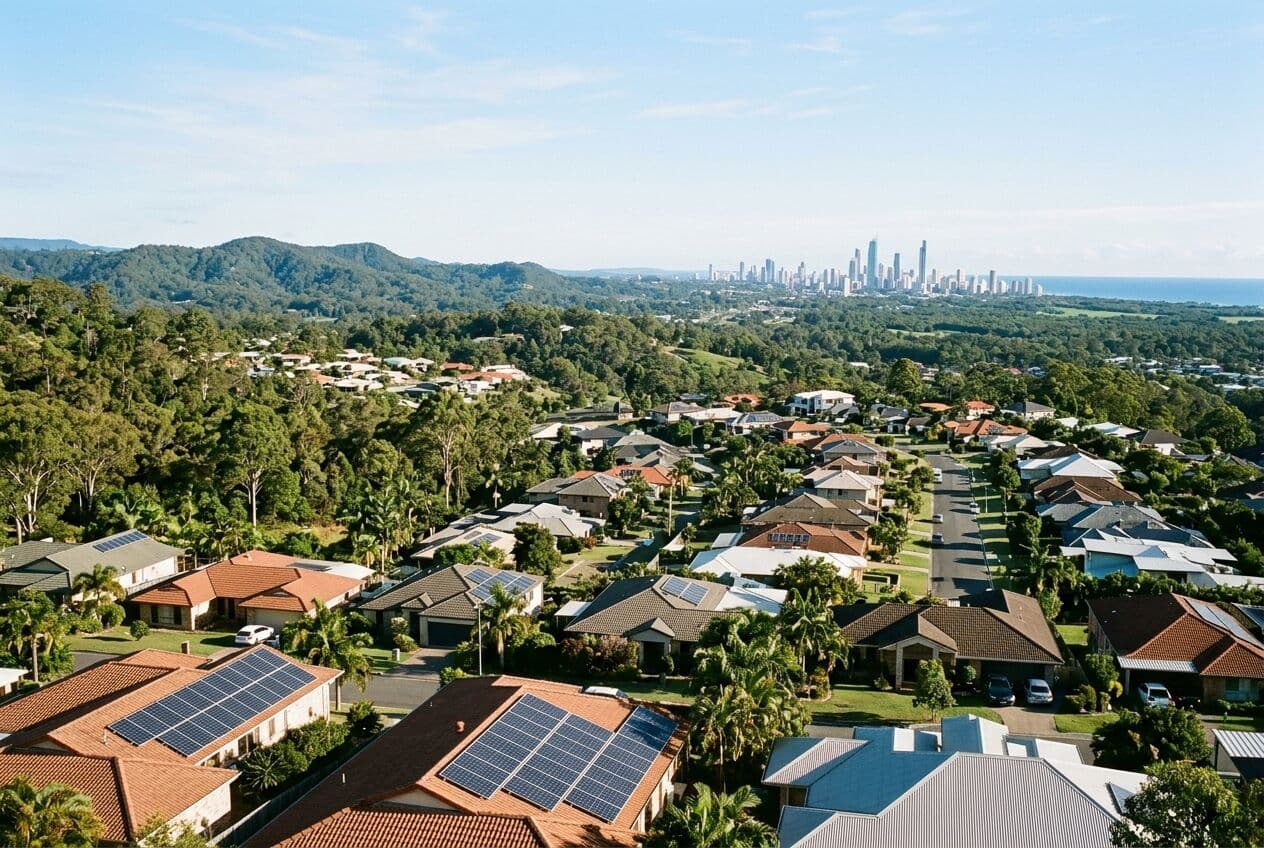
The boom that made it possible
Between 2008 and 2012 Australian households put solar on their roofs faster than almost anywhere in the world. Queensland's Solar Bonus Scheme, introduced in 2008, paid 44 cents for every kilowatt-hour a household sent back to the grid, several times the retail price of power. Federal rebates and then the Solar Credits multiplier on renewable energy certificates knocked thousands of dollars off the cost of a system. Panel prices were falling every quarter as Chinese manufacturing scaled up. For a few years, a rooftop system on a Gold Coast house paid for itself quickly, and everyone knew someone who had one.
The Gold Coast was ideal territory. Sun, a growing stock of detached houses with north-facing roofs, new estates pushing into the hinterland, and homeowners who liked a deal they could see on their power bill. International Solar Solutions sold and installed residential and small commercial systems through that period.
What the company was
Adrian Campbell started it in 2008, aged 19. The trade background mattered: a plumber understands roofs, penetrations, waterproofing and how services run through a house, which is most of what goes wrong on a bad solar installation. He could sell the system at the kitchen table and understand what the installers would face on the roof.
At its peak the company employed around 40 people, from sales staff to installation crews, and installed more than 300 systems. Two related businesses ran alongside it. International LED Lighting Solutions, from 2011, supplied energy-efficient lighting to government and public spaces. Green Energy Corporation of Australia, from 2013, sold high-efficiency systems to businesses. Across the three, Adrian is credited with more than six megawatts of installed generating capacity.
What he learned about selling
Solar in those years was a sales business as much as an engineering one. Every roof was a different pitch and a different payback calculation, and the customer usually needed the maths explained plainly before they would sign. Adrian did a lot of that explaining himself. The habit of working out the return before talking about the product carried straight into the property work he does now in Lombok, and into the Lombok guide for Australians, which is written the same way.
He also learned how fast growth hides problems. A company adding customers every week can carry a lot of loose paperwork and stretched supplier accounts without anyone noticing, because the revenue keeps arriving. He writes about that in What I learned starting a company at 19.
How it ended
In 2011 he outsourced the management of the company to go and rebuild a resort in Bali, which became Troppo Zone Puri Rama Resort. It was the wrong call. The managers he left in charge ran the business down. Customers were signed up and deposits taken without systems being ordered, supplier accounts were drained and staff left.
When he stepped back in, finishing the outstanding installations would have cost more than refunding everyone, so he closed the company and refunded the customers. About 36 people lost their jobs. In 2015 the Queensland Office of Fair Trading prosecuted the directors over payments taken in 2013 and 2014 for systems that were never installed. He was fined $10,000 and paid $18,355 in restitution. He has written the whole episode up himself on the record, because he would rather you read it from him.
The industry after
The boom ended as it had begun, with policy. Queensland cut its feed-in tariff for new customers in 2012, the Solar Credits multiplier was wound back, and a wave of installers closed. Rooftop solar did not stop; Australia now has one of the highest rates of household solar in the world. But the easy years were over, and the companies that survived were the ones with systems, not just sales.
The rule it left behind
Every company Adrian has run since has two signatories on its accounts, and no single manager controls customer money. That rule came from the solar business. It sits at the top of how he runs companies.